
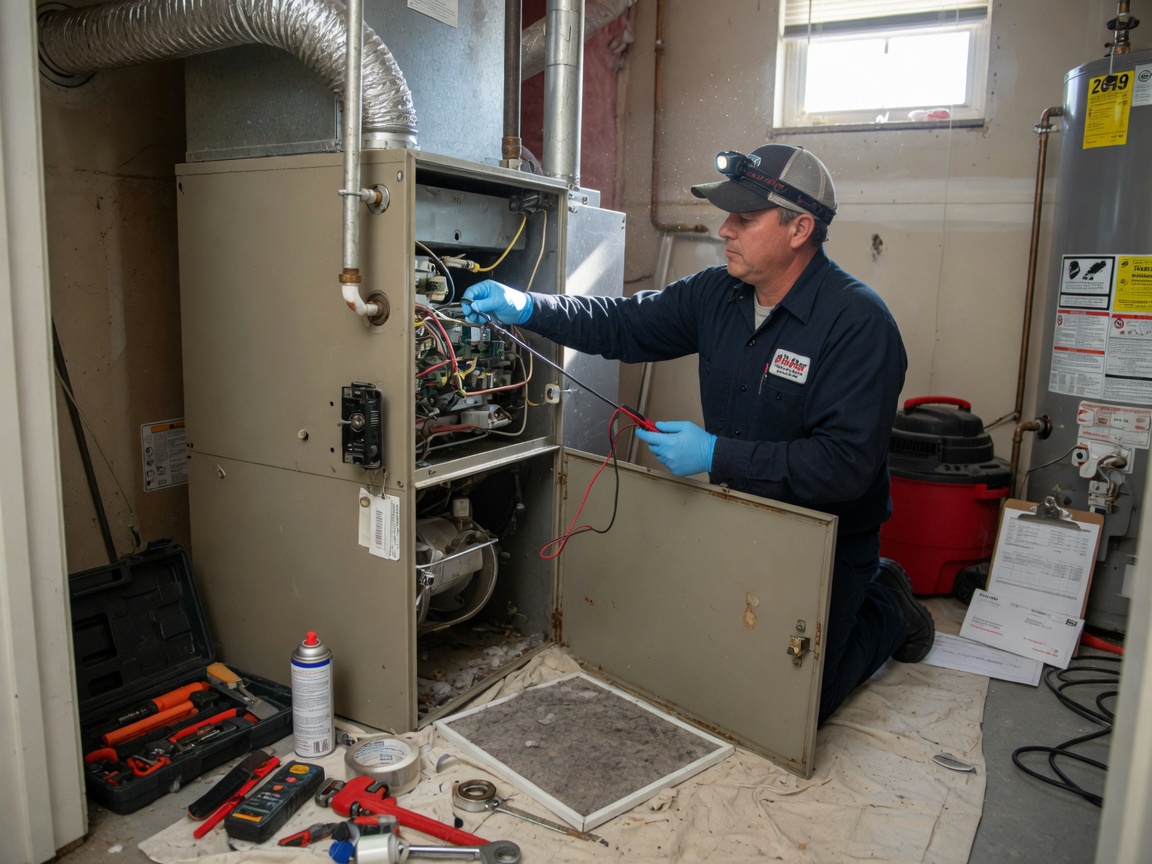
Furnace systems in Fulshear neighborhoods such as Cross Creek Ranch and Fulbrook often run on natural gas and sit in attics or garages where summer humidity accelerates corrosion on heat exchangers and burners. Technicians check for cracked exchangers by running combustion analysis because even small fissures allow carbon monoxide into living spaces, especially in homes built during the 2010s boom when builders used lighter-gauge metals to cut costs. Soil movement along the Brazos River corridor can shift ductwork connections, creating hidden leaks that reduce efficiency and force the furnace to short-cycle during cold snaps.
In Weston Lakes and nearby Richmond properties, older single-story homes with slab foundations experience different issues than newer two-story builds in Fulbrook. Condensate drains clog faster here due to pollen and river-area dust, leading to safety switches tripping the unit. Technicians carry spare pressure switches and flame sensors because these parts fail more often when summer humidity leaves residual moisture inside cabinets through fall. Proper combustion air intake matters because tight envelopes in energy-efficient homes starve burners if vents are blocked.
Fort Bend County code requires carbon monoxide detectors within 15 feet of sleeping areas when any gas appliance is serviced, so crews verify detector placement before leaving a job. Technicians also inspect venting that terminates near Fulshear Town Square area roofs where wind patterns can create downdrafts, pushing exhaust back into the home. Seasonal temperature swings from hot humid summers to occasional freezes stress limit switches and rollout sensors, so replacement parts must match the exact model to avoid repeated callbacks.
Technician insight
In Fulshear the thing that catches most people out with Furnace Repair is how our humid summers leave moisture inside attic units serving Cross Creek Ranch homes, causing flame sensors to fail right when the first cold front hits from the Brazos River side.
Short-Cycling in Fulbrook Home
A two-story home in Fulbrook experienced repeated furnace shutdowns during a December cold snap. Inspection revealed a clogged condensate drain and corroded flame sensor from summer humidity. The technician cleared the drain, replaced the sensor, verified combustion readings, and confirmed the unit maintained steady heat without tripping safety switches.
Furnace Repair Services We Offer
✓Gas Burner Cleaning
Removes carbon buildup and adjusts gas pressure to restore efficient combustion in Fulshear homes where humidity promotes residue on orifices.
✓Heat Exchanger Inspection
Uses combustion analyzers to detect cracks that allow carbon monoxide into ductwork common in Cross Creek Ranch properties.
✓Blower Motor Repair
Replaces or lubricates motors strained by dust from Brazos River terrain and attic installations in Weston Lakes homes.
✓Igniter Replacement
Installs hot-surface igniters that fail from thermal cycling during Fort Bend County winters after humid summers.
✓Thermostat Calibration
Adjusts controls to prevent short-cycling caused by temperature swings between Katy and Simonton weather patterns.
Furnace Repair Cost in Fulshear, TX
| Service | Typical Range | What Affects It |
|---|---|---|
| Diagnostic Visit | $125–$225 | Includes combustion testing; waived if repair proceeds same day |
| Igniter Replacement | $180–$320 | Varies by furnace model and access in attic installations |
| Blower Motor Repair | $350–$650 | Higher when motor requires full assembly replacement |
| Gas Valve Service | $225–$450 | Depends on whether cleaning or full valve replacement is required |
Ranges are typical for Fulshear, TX and confirmed with an exact written quote before any work starts.
How it works
- 1
Safety and Diagnostic Check
Technician verifies gas shutoff, tests for carbon monoxide, and runs full system diagnostics on arrival at the Fulshear address.
- 2
Component Inspection
Examines burners, exchanger, and venting for humidity-related corrosion and checks duct connections shifted by local soil movement.
- 3
Repair or Part Replacement
Cleans or replaces failed parts such as igniters or sensors using manufacturer-matched components for the specific model.
- 4
System Test and Verification
Restarts furnace, confirms proper combustion, checks CO levels again, and ensures code-compliant detector placement.
Pricing
Upfront quotes provided before any repair work begins.